Energy Efficiency of Buildings Regulation (ENEB)
Newly constructed buildings, as well as existing ones, will be subject to inspection by specialized energy inspectors in accordance with the provisions of the Regulation on the Energy Efficiency of Buildings (KENAK) in order to certify their energy efficiency. Based on the latter, they will be classified into individual energy categories and the corresponding energy identity card will be completed, which will constitute an integral element of the building permit and will become necessary in all legal transactions that will be drawn up for the property.
KENAK aims to:
– Saving energy for heating, cooling, lighting, and ventilation of buildings by limiting energy requirements.
– Ensuring hygienic and comfortable living conditions for building users by maintaining appropriate levels of thermal and visual comfort.
– The implementation of the principles of bioclimatic design accompanied by the increase in the use of those devices that contribute to the exploitation of renewable energy sources (photovoltaics, wind turbines, passive heating-cooling systems, etc.).
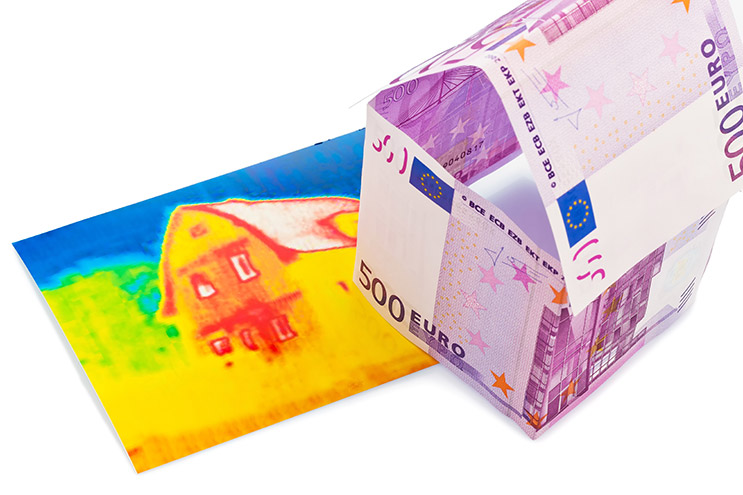
The building's heat losses
Regarding the mechanism of heat loss from buildings, it can be noted that they lose heat in three main ways:
- by conduction, through walls, roofs, floors, glass openings.
- by transfer with the movement of air, through open windows or through the joints of the frames.
- by radiation, from the building shell, when external temperatures are lower.
Energy saving by using aluminum thermal insulation systems
Ensuring thermal comfort conditions inside buildings, with the minimum possible energy consumption, requires limiting heat losses from the surface of the frames to the external environment during the winter period and reducing unwanted heat gains during the summer. The flow of heat depends on the temperature difference between the internal and external environment, as well as on the thermal resistance of the materials that make up the frame.
Specifically in aluminum frames, the most common method to limit the flow of thermal energy is to add thermal insulation, i.e. materials with high thermal resistance between the aluminum profiles. The thermal losses of a frame come from its transparent and opaque elements and depend on the average thermal transmittance coefficient of its total surface (glass pane and aluminum profile).
The purpose of thermal insulation in aluminum systems is also to avoid thermal bridges, that is, the creation of water vapor and humidity inside the frames, which increase heat losses and create different thermal stresses in the individual materials that make up the structure.